
Patient Information Sheet: Whole-Body Vibration Therapy for Osteopenia

Dublin City Osteopath | Supporting Your Strength, Balance & Long-Term Vitality

What is Whole-Body Vibration (WBV) Therapy?

Whole-Body Vibration (WBV) therapy is a gentle, evidence-based treatment where you stand on a specialized vibrating platform. The platform sends fast, gentle micro-vibrations through your body, causing your muscles to contract and relax reflexively up to 50 times per second.

For patients diagnosed with osteopenia (early bone density loss), WBV provides the benefits of weight-bearing exercise without putting harsh stress or impact on your joints.

How WBV Helps Your Bones

Bones adapt to physical signals. The rapid mechanical vibrations trick your skeleton into thinking it’s carrying weight. This activates osteocytes—your body’s bone-building cells—stimulating them to absorb calcium and reinforce bone structure in key areas like the spine and hips.

The Benefits: Physical & Mental

Physical Advantages

  • Protects & Supports Bone Density: Helps slow down progressive bone loss safely.

  • Sharpened Balance & Fall Prevention: Strengthens deep stabilizer muscles and improves joint awareness (proprioception) to keep you steady on your feet.

  • Joint-Friendly Muscle Toning: Builds muscular strength around fragile joints without heavy lifting.

  • Enhanced Circulation: Boosts blood flow and lymphatic drainage, bringing vital oxygen to tissues and easing stiffness.

Mental & Emotional Wellbeing

  • Movement Confidence: Helps overcome the fear of falling or moving, empowering you in daily activities.

  • Stress Reduction: Gentle physical vibration helps lower cortisol (the primary stress hormone) and relieves physical tension.

  • Boosted Energy: Releases feel-good endorphins, leaving you feeling lighter, energized, and refreshed.

What to Expect During a Session

  • Duration: Quick and effective—typically 10 to 15 minutes, 2 to 3 times per week.

  • What You’ll Do: Under our team’s guidance, you’ll stand on the plate in simple, controlled postures (such as a slight knee bend, heel raises, or gentle balance holds).

  • What It Feels Like: You’ll feel a warm, tingling vibration through your legs and core as your muscles naturally work to hold you steady. It is non-invasive and easy to manage.

Safety & Precautions

WBV is exceptionally safe for most people, but we always tailor settings to your specific health history.

Please let us know before starting if you have:

Recent joint replacements or surgical implants

Severe cardiovascular conditions or acute deep vein thrombosis (DVT)

Active retinal detachment

Acute hernia or severe acute back pain

Ready to Strengthen Your Foundation?

If you’ve been diagnosed with osteopenia or simply want to improve your balance and bone health, we are here to guide you every step of the way.

  • Clinic: Dublin City Osteopath

  • Bookings & Inquiries: Speak to your practitioner at your next appointment or contact our front desk to schedule a guided vibration session.
Beyond the "Baby Ache": Why Postpartum Lower Back Pain Might Be SI Joint Dysfunction

Beyond the "Baby Ache": Why Postpartum Lower Back Pain Might Be SI Joint Dysfunction

Bringing a new life into the world is an incredible feat, but let’s be honest about the physical toll it takes. Between the repetitive lifting, awkward nursing positions, sleep deprivation, and massive structural shifts, a mother's body goes through an immense transition.

If you are a new mum in Dublin dealing with a sharp, nagging ache right at the base of your spine or deep in your glutes, you are far from alone. This discomfort is frequently brushed off as standard "postpartum recovery," but very often, the real culprit is Sacroiliac (SI) Joint Dysfunction.

Here is a look at what is happening inside your pelvis post-delivery, and why visiting an osteopath for gentle realignment is one of the best things you can do for your recovery.

What Exactly is the Sacroiliac (SI) Joint?

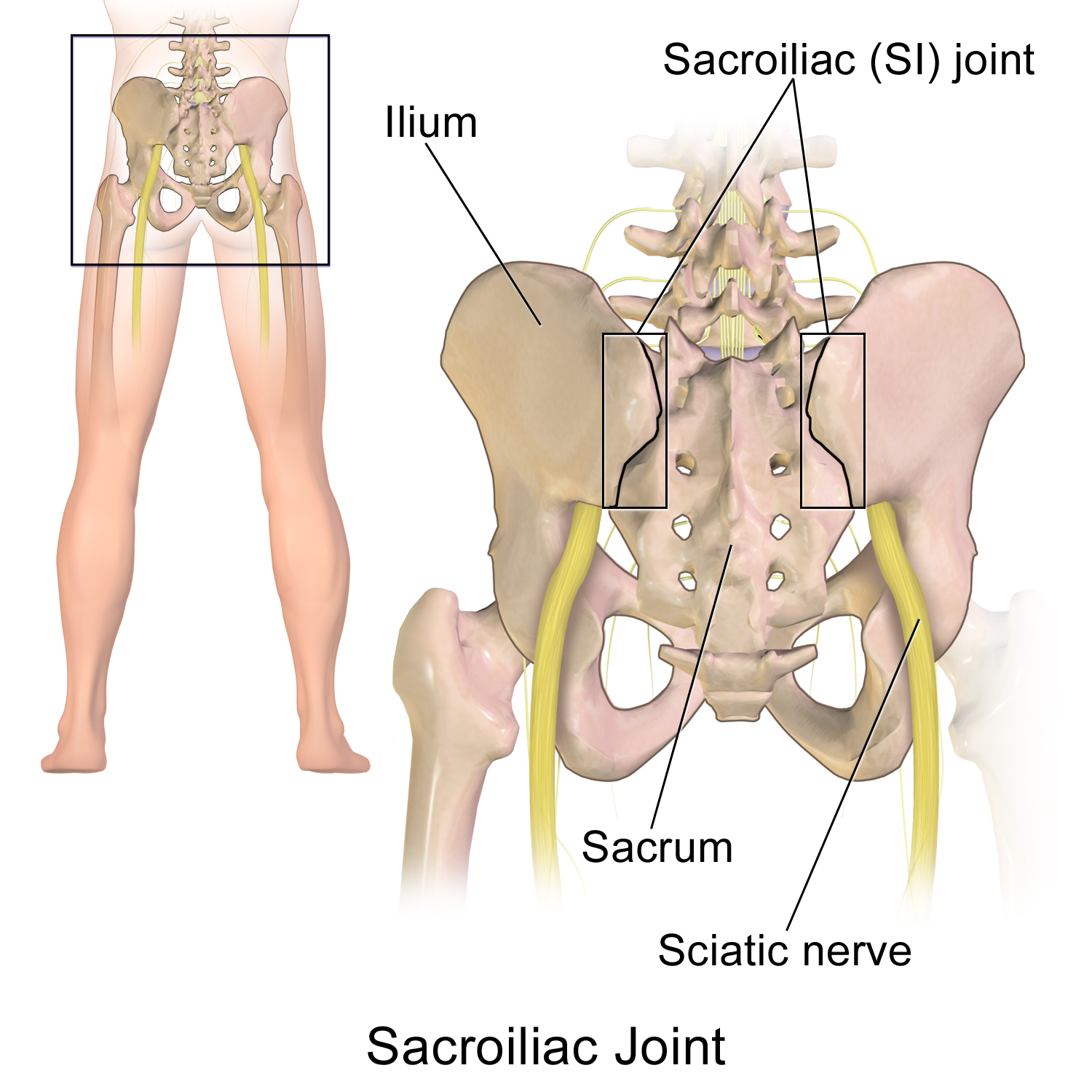
Your pelvis isn't just one solid bone; it is a ring made of separate parts. The sacroiliac joints sit at the back of this ring, connecting your sacrum (the triangular bone at the base of your spine) to your ilium (the large hip bones).

The anatomy of the sacroiliac joint and its close relationship to surrounding nerves.. Source: Wikipedia


As you can see in the diagram, the SI joints act as vital shock absorbers between your upper body and your legs. Notice how closely the sciatic nerve runs next to the joint. When the SI joint becomes misaligned or inflamed, it can easily irritate this nerve, causing pain that radiates down into your buttocks and thighs.

Why Does Pregnancy and Delivery Cause SI Dysfunction?

During pregnancy, your body releases a hormone called relaxin. Its job is exactly what it sounds like: it softens and relaxes the ligaments in your pelvis so the birth canal can expand to deliver your baby.

While relaxin is a biological miracle for childbirth, it creates a temporary side effect: pelvic instability.

  • The Lingering Effect: Relaxin doesn't instantly vanish the moment your baby is born. It can linger in your system for several months (and even longer if you are breastfeeding), leaving your pelvic ligaments loose and vulnerable.

  • The Structural Shift: The mechanics of labor, prolonged pushing, or even carrying a heavy baby on one hip can push an already unstable pelvis out of its optimal alignment.

  • The Muscle Guarding: When the ligaments are too loose to hold the bones in place, your lower back and glute muscles go into overdrive, tightening up to "lock down" the area. This leads to that familiar, exhausting ache.

Signs You Might Have SI Joint Dysfunction

If you are experiencing any of the following symptoms while navigating postpartum life in Dublin, your SI joints likely need attention:

  • One-Sided Pain: A sharp or dull ache localized to one side of your lower back or upper glute.

  • Transition Pain: Discomfort that spikes when changing positions—like getting out of the car, stepping off a Dublin bus, standing up from a deep sofa, or rolling over in bed.

  • Weight-Bearing Discomfort: Pain when standing on one leg, which makes getting dressed or walking up the stairs incredibly frustrating.

  • Fake Sciatica: A shooting pain or ache that travels down the back of your leg, caused by the inflamed joint pressing on the nearby sciatic nerve.

Why Visit an Osteopath for Postpartum Realignment?

Many new mothers assume they just have to "wait it out" or take pain medication. However, leaving a misaligned pelvis to sort itself out can lead to long-term biomechanical issues, impacting your knees, hips, and upper back over time.

Osteopathy offers a safe, non-invasive, and holistic pathway back to comfortable movement. Here is how an osteopathic treatment supports your postpartum healing:

1. Gentle, Whole-Body Realignment

Osteopaths do not just look at the painful spot. We evaluate how your feet, knees, pelvis, and spine are interacting. Using gentle, targeted techniques—such as muscle energy techniques and soft tissue release—we help guide the SI joints back into their natural alignment without forceful adjustments.

2. Relieving Muscle Guarding

By addressing the hyper-toned (overly tight) muscles surrounding the pelvis, osteopathy breaks the pain-spasm cycle. Relaxing these muscles reduces the mechanical stress on the inflamed SI joint, providing immediate relief.

3. Restoring Fluid Mobility

Pregnancy changes your center of gravity. Osteopathic treatment helps your body adapt back to its pre-pregnancy state, improving the circulation of blood and lymphatic fluid around the pelvis, which speeds up tissue healing.

4. Practical Posture Care for Dublin Mums

A crucial part of osteopathic care is education. We provide you with tailored advice on how to lift your baby, position yourself comfortably while nursing, and safely rebuild your deep core stability without straining your healing pelvis.

A Note to New Mothers

Your body spent nine months changing to grow a baby, and the birth process itself is a major physical event. You deserve the time and care to help your body knit back together properly. Pain is your body's way of asking for support—not a tax you have to pay for becoming a mother.

If you are struggling with lower back or pelvic pain, let us help you regain your structural balance so you can focus on enjoying your new chapter.

Ready to feel balanced again? Contact Dublin City Osteopath today to book your postpartum assessment and realignment session.

The Dublin 2 Desk Syndrome: Is Your 9-to-5 Rewiring Your Spine?

Title: The Dublin 2 Desk Syndrome: Is Your 9-to-5 Rewiring Your Spine?

Between the back-to-back Zoom calls, pushing code before a deadline, and clearing an inbox that never seems to sleep, the modern Dublin 2 office worker is putting in serious shift hours. But while you’re busy building the next big platform or managing global accounts, your body might be paying a hidden tax.

If you’ve noticed a persistent ache between your shoulder blades by Thursday afternoon, or your lower back feels like concrete when you stand up from your chair, you’re experiencing what we call the "Desk Syndrome."

The Anatomy of the Slouch

Human bodies are built for movement, yet the average tech or finance professional spends upwards of 9 hours a day locked in a seated position. When you focus intensely on a screen, your head naturally drifts forward, your shoulders round, and your lower back loses its natural curve.

For every inch your head moves forward, it adds an extra 10 pounds of pressure on your neck muscles. Over weeks and months, this structural stress leads to localized inflammation, tension headaches, and restricted joint mobility.

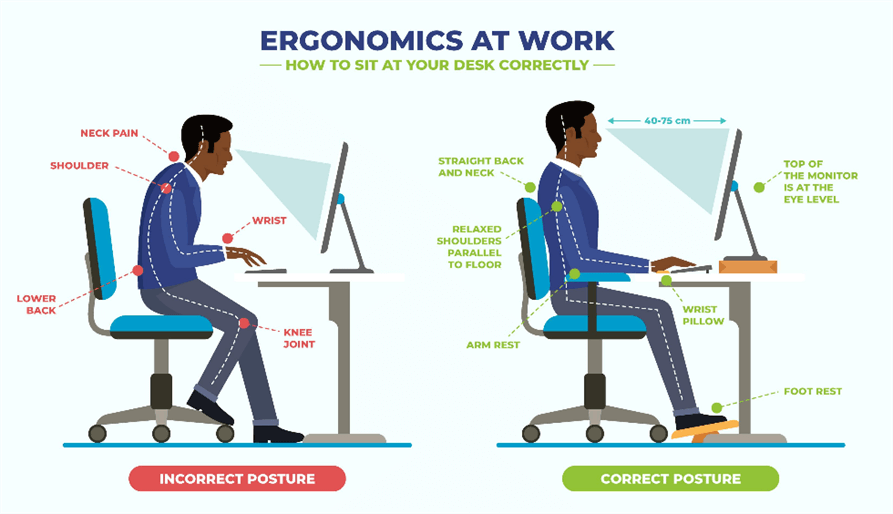
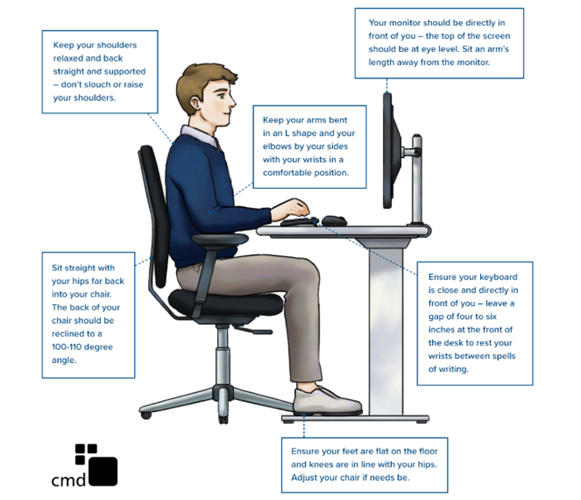
To visualize what your setup should look like to prevent this mechanical strain, take a quick look at this ergonomic blueprint:

The Ideal Ergonomic Desktop Setup. Source: CMD Ltd


Notice the key angles here that keep your musculoskeletal system happy:

  • The L-Shape: Your elbows should rest comfortably at a 90-degree angle by your side, preventing your upper traps from overworking.

  • Eye-Level Alignment: The top of your monitor should align with your eyes so your neck doesn't constantly flex downward.

  • Hip Depth: Sitting fully back into the chair allows the lumbar support to preserve your spine's natural curve, reducing pressure on your lower discs.

The 3-Step Mid-Day Spine Reset

You don’t need to completely overhaul your calendar to start feeling better. If you can spare just two minutes between meetings, run through this specific sequence to offload mechanical stress before it builds up.


1

The Chest Opener

30 Seconds

Stand up and interlace your fingers behind your back. Gently straighten your arms and lift your chest toward the ceiling. Hold for 30 seconds while taking deep belly breaths to release the tight pectoral muscles that drag your shoulders forward.

2

Thoracic Desk Twists

45 Seconds

Sit tall in your chair with your feet flat on the floor. Place your right hand on your left knee and gently rotate your upper body to the left, looking over your shoulder. Hold for 15 seconds, then switch sides. This mobilizes the mid-back joints that freeze up during long typing sessions.

3

The Chin Tuck Reset

45 Seconds

Look straight ahead and draw your head straight back, as if making a "double chin" (don't tilt your head down, keep it level). Hold for 5 seconds, release, and repeat 5 times. This activates the deep neck flexors that support your head against screen-drift.


Introducing Our Corporate Back Clinic in Dublin 2

Ergonomics and quick stretches are fantastic preventative maintenance, but sometimes your joints and muscles need direct, hands-on intervention to break the cycle of chronic tension.

We are launching a specialized Corporate Clinic right here in Dublin 2, designed specifically around the hectic schedules of office professionals. Whether you need targeted osteopathic treatment to unlock a stiff lower back, or structural advice to keep you performing pain-free at your desk, we’ve got your back.

Invest in your physical capital. A pain-free body means sharper focus, better sleep, and higher energy levels both inside and outside the office.

Drop by our clinic on Fitzwilliam Street Lower or get in touch to find out how we can help you or your team stay moving beautifully.

Beyond the Exercises: 3 Structural Secrets Osteopathy Offers (That Physios Miss)

Introduction: The Dublin Patient's Dilemma

If you’ve picked up an injury running along the active paths of the Phoenix Park or woke up with severe neck stiffness after an intense week at your desk in the Silicon Docks, your immediate instinct might be to book a standard physical therapy appointment. But many patients reach a point where standard rehabilitation exercises aren’t moving the needle.

This brings up a massive, frequently asked question: What can osteopathy actually provide a patient that physiotherapy can't?

While both professions are exceptional at treating pain, their core philosophies, diagnostic lenses, and hands-on techniques differ dramatically. Understanding these differences is often the missing key to moving past chronic injury and reclaiming true fluid movement.

Osteopathic manual therapy focuses on global physical manipulation to restore structural symmetry.. Source: Albina Gavrilovic / Getty Images

The Core Difference: Isolated Rehabilitation vs. Total Structural Unity

The simplest way to break down the contrast is looking at where the practitioner’s eyes go first.

  • Physiotherapy often operates on a localized, rehabilitative model. If your knee hurts, a physiotherapist will predominantly examine the knee joint, look at the surrounding quad and hamstring strength, and prescribe highly targeted exercises to stabilize that specific area.

  • Osteopathy, by contrast, is built on the principle that the body is an interconnected, self-healing ecosystem. An osteopath treats the host, not just the symptom. If you present with knee pain, an osteopath will carefully assess your pelvic alignment, the mechanics of your lower back, and even old ankle restrictions to discover why that knee is being forced to take an uneven mechanical load in the first place.

3 Things You Get from an Osteopath That You Won't Find in a Physio Clinic

1. Global Hands-On Manual Manipulation

While many modern physiotherapists lean heavily toward "hands-off" treatment pathways (relying mostly on exercise sheets, gym rehabilitation, and resistance bands), osteopaths maintain a deeply tactile, hands-on approach throughout your entire recovery cycle. Osteopathic care relies on highly specialized manual palpation, rhythmic joint mobilization, visceral manipulation, and myofascial release. We physically guide your restricted tissues back into alignment during the session, providing immediate neurological and mechanical relief that an exercise sheet simply cannot duplicate.

2. Optimization of Systemic Fluid Mechanics

Osteopathy doesn't just evaluate muscles and bones; it treats the integrated vascular and nervous networks. By physically releasing deep fascial restrictions around major arteries, veins, and lymphatic pathways, osteopathic treatment directly enhances systemic circulation and drainage. Improving fluid movement speeds up cellular repair, reduces chronic, sluggish inflammation, and lowers the hyper-tonicity (constant background tension) of an over-stimulated sympathetic nervous system.

3. Deep Integration of the Viscerosomatic Framework

Did you know that chronic tension in your mid-back can sometimes be linked to digestive stress, or that pelvic floor restrictions can alter your walking gait? Osteopaths are explicitly trained in viscerosomatic relationships—how your internal organs (viscera) share nerve pathways with your musculoskeletal structure. By identifying and treating these profound somatic connections, an osteopath can resolve deep, structural back and pelvic issues that local muscle rehabilitation completely overlooks.

Choosing the Right Path for Your Recovery

To help clarify which approach aligns best with your specific health goals, consider how the primary manual therapy disciplines contrast in their daily clinical practice:

DimensionOsteopathyPhysiotherapyChiropracticCore PhilosophyThe body is an interconnected system; structure dictates function.Focused heavily on local biomechanical function and targeted rehabilitation.Centers primarily on spinal alignment and nervous system flow.Primary MethodsGlobal soft tissue work, joint mobilization, gentle visceral release.Exercise prescription, localized electrotherapy, targeted stretching.High-velocity, low-amplitude spinal adjustments (joint cracking).Typical SessionHolistic, full-body assessments with prolonged manual contact.Short local assessment paired with guided gym or home exercises.Short, localized appointments heavily focused on spinal manipulation.

The Takeaway: If you have an isolated sports injury and require a structured gym rehab plan to rebuild specific muscle strength, a physiotherapist is a great fit. But if you are dealing with chronic, recurring pain, systemic stiffness, or an injury that feels like it’s throwing your entire alignment out of whack, a Dublin City Osteopath provides the comprehensive structural resolution your body is looking for.

Why Your Desk Job is Secretly Sabotaging Your Recovery (And How to Fix "Tech Neck" in Dublin 2)

For the tech professionals and office workers navigating the busy streets of Dublin 2, long hours at a desk have become the norm. But while you’re optimizing your workflow and crushing deadlines, your body might be paying a hidden price.

Neck stiffness, recurring lower back pain, and "tech neck" aren't just minor inconveniences you should push through. They are structural issues that directly impact your overall health, sleep quality, and daily performance.

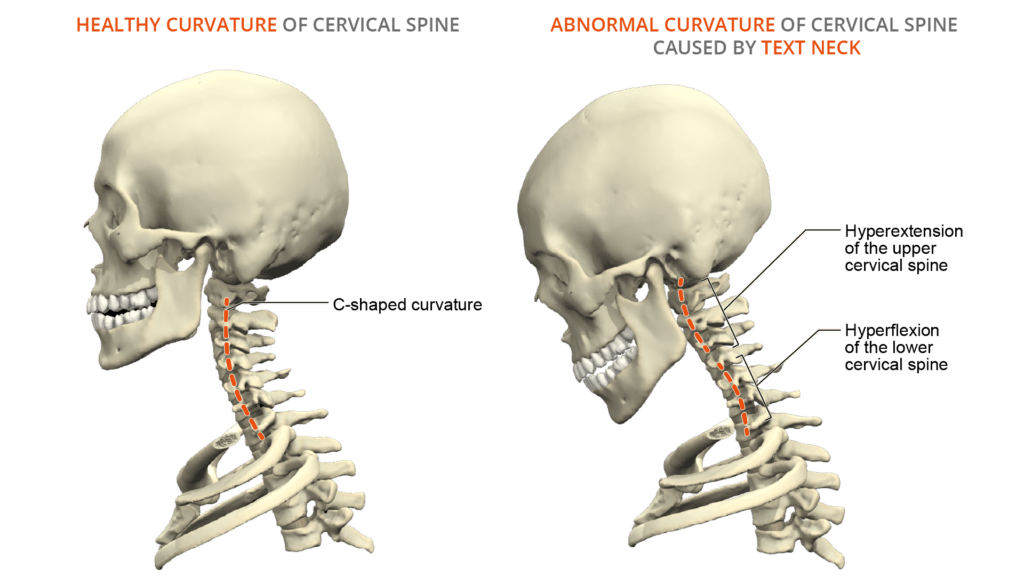
The structural impact of 'Tech Neck'. Source: Primal Pictures


The Anatomy of "Tech Neck"

When you lean forward to look at a laptop screen or hunch over your phone, the weight of your head effectively doubles or even triples. This places an enormous, sustained strain on your cervical spine and the supporting muscles in your neck and shoulders.

Over time, this forward-head posture forces your body to build compensatory muscle patterns. The muscles in your chest become tight and shortened, while the muscles in your upper back become overstretched and weak. This imbalance is the root cause of the burning pain between your shoulder blades and the tension headaches that often hit by 3:00 PM.

Beyond the Ache: How Posture Impacts Your HRV

Many professionals today rely on wearable fitness technology to track their Heart Rate Variability (HRV) and resting heart rate to gauge their recovery. What most don't realize is that chronic postural strain can actively tank those metrics.

When your thoracic spine (upper back) is locked up and your shoulders are rounded, your diaphragm cannot fully expand. This leads to shallow, upper-chest breathing, which subtly signals your body to remain in a state of low-grade stress (activating the sympathetic nervous system). By correcting your posture and freeing up your ribcage, you improve your breathing mechanics—which can directly improve your HRV and help you get more restorative sleep.

3 Quick Desk Hacks for Immediate Relief

Before relying on painkillers, try implementing these basic ergonomic shifts at your workstation today:

  1. The 20-8-2 Rule: Sitting perfectly still for eight hours is hard on your body, even with a great chair. For every 30 minutes, aim to sit for 20 minutes, stand for 8 minutes, and walk or move for 2 minutes.

    APICO PAIN MANAGEMENT


  2. Elevate Your Monitor: Your eyes should naturally fall on the top third of your screen without having to tilt your head down. If you work primarily on a laptop, a stand and a separate wireless keyboard are non-negotiable for spinal health.

    Nuffield Clinic


  3. Check Your Angles: Keep your feet flat on the floor, your knees at a 90-degree angle, and your elbows resting comfortably to support the weight of your arms.

  4. Correct vs. Incorrect Desk Ergonomics. Source: LoctekMotion

The Complete Recovery Pathway

While ergonomic adjustments are crucial for prevention, they often aren't enough to reverse years of accumulated structural strain. Once compensatory muscle patterns are locked in, manual osteopathic intervention is often required to break the cycle of pain.

For corporate workers dealing with chronic desk strain, we recommend our Complete Recovery Pathway. This targeted 4-session package (€275) is specifically designed to reset the physical load of daily corporate life:

  • Session 1: A comprehensive biomechanical audit to diagnose structural imbalances, followed by immediate osteopathic intervention for acute relief.

  • Sessions 2 & 3: A combined approach utilizing targeted adjustments and intensive soft tissue release to break down stubborn compensatory muscle patterns.

  • Session 4: Final structural stabilization and the development of a customized preventative protocol to keep you performing at your best.

(Prefer to start with a single visit? Initial consultations are €80, with follow-up treatments at €75).

Step Away from the Desk and Start Healing

You don't have to accept back and neck pain as just another part of the job. Located conveniently at Clifton House on Fitzwilliam Street Lower, Dublin City Osteopath is perfectly positioned for you to step away from your desk and get expert relief right on your lunch break.

Don't delay your recovery—get an accurate diagnosis today and start your journey back to pain-free movement.

Link to Book Your Appointment Now

Is Your Desk Job the "New Smoking"? How to Reclaim Your Spinal Health

It is an unavoidable reality of the modern workday: for many office and tech professionals, the majority of the day is spent locked into a seated position, eyes glued to a screen. While this focused environment is essential for productivity, it takes a severe and compounding toll on your biomechanics and spinal alignment.

In the clinical world, we operate on a very straightforward philosophy: sitting for long periods of time is the new smoking. Prolonged desk work doesn't just cause temporary stiffness; it actively pulls your spine and joints out of their natural alignment, leading to chronic discomfort and restricted mobility.

The Physical Toll of the Sedentary Workplace

When you sit for hours on end, your body adapts to that position. The hip flexors shorten and tighten, the shoulders round forward, and the upper back overstretches. Over time, your body builds compensatory muscle patterns to deal with this structural imbalance. What starts as a minor ache in your neck or a dull throb in your lower back is actually your body signaling that its structural integrity is compromised.

Managing temporary pain with quick fixes will only get you so far. Meaningful recovery requires addressing the root cause of these imbalances.

Dublin City Osteopath

Actionable Steps for the Office

While you may not be able to quit your desk job, you can absolutely change how your body handles it. Here are a few immediate adjustments you can make to your daily routine:

  • The Ergonomic Audit: Ensure your monitor is at eye level. Your feet should be flat on the floor, with your knees bent at a 90-degree angle.

  • Mandatory Micro-Breaks: Set a timer to stand up, walk around, and reset your posture every 45 minutes. Movement is the best antidote to static tension.

  • Targeted Stretching: Incorporate simple chest-openers and gentle spinal twists into your day to counteract the forward-hunching posture of keyboard work.

Proactive Osteopathic Care

Recovery is not a one-time event; it is a structured process. To directly support the busy schedules of local corporate workers, we host a dedicated monthly posture and back clinic. This provides a focused opportunity to evaluate structural imbalances, catch subtle movement changes, and correct compensatory patterns before they escalate into acute pain.

For those dealing with active discomfort or looking to establish a long-term strategy for their physical health, we have structured our treatment packages to provide clear, actionable roadmaps:

  • The Complete Recovery Pathway (€275): A comprehensive four-treatment package designed to bridge the gap between acute relief and structural correction. We utilize targeted adjustments and intensive manual therapy to break down compensatory muscle patterns, followed by a customized preventative protocol to keep you performing at your best.

  • Spinal Mobility & Maintenance Block (€275): Recovery is only the first step. To safeguard against recurring injuries, this package provides ongoing preventative support to manage the physical load of daily life, keeping your joint mobility and tissue health optimized year-round.

Living with pain is exhausting and disruptive. Don't wait until your discomfort dictates your lifestyle. Getting back to a pain-free life requires an accurate diagnosis, targeted hands-on treatment, and a personalized recovery plan.

Dublin City Osteopath

Visit Us: Take the first step toward lasting relief by visiting our clinic space at Clifton House business Centre, Fitzwilliam Street Lower, Dublin 2.

Peter Best | MSc., BSc. (Hons) Ost. Med., ND, DO Clinical Director & CEO, Dublin City Osteopath

Clinical Insights: Why Biomechanics is the Unsung Hero of Longevity

When we talk about longevity, the conversation usually revolves around nutrition, sleep, and genetics. While these are undeniably crucial pillars of a long life, there is a missing link that dictates not just how long we live, but how well we live: biomechanics.

In clinical practice, we see a distinct difference between lifespan (the number of years you are alive) and healthspan (the number of years you are active, pain-free, and independent). Bridging the gap between the two requires a deep understanding of how the human body moves, absorbs force, and adapts over time.

Here is a closer look at the science of human movement and why optimizing your biomechanics is the ultimate longevity hack.

The Physics of Aging: Tissue Capacity vs. Load

To understand biomechanics in the context of aging, we have to look at a fundamental clinical concept: the relationship between tissue capacity and load.

Every time you take a step, lift a grocery bag, or even sit at your desk, you are applying mechanical load to your muscles, tendons, ligaments, and joints.

  • Load: The physical stress placed on your body by gravity and movement.

  • Tissue Capacity: The maximum amount of stress your bodily tissues can handle before breaking down.

When your movement patterns are misaligned—perhaps due to a previous injury, poor posture, or muscle imbalances—the load is distributed unevenly. Over time, this concentrated stress exceeds your tissue capacity. In clinical terms, this leads to cumulative micro-trauma, cartilage degeneration, and conditions like osteoarthritis.

The Translation: Think of your joints like a bridge. If the cables (your muscles and tendons) pull unevenly, the foundational pillars (your joints) bear the brunt of the traffic. Over decades, that bridge will wear down prematurely. Optimizing your biomechanics ensures the traffic is distributed perfectly.

Three Biomechanical Focus Areas for a Longer Healthspan

Improving your biomechanics doesn't require a medical degree; it requires intention and consistency. Here are three critical areas we focus on clinically to promote longevity:

1. Preserving Joint Centration Joint centration occurs when a joint is in its optimal anatomical position. This allows for maximum surface area contact, reducing wear and tear. When joints are decentered (like a shoulder rolled forward), it creates friction. Maintaining proper posture and mobility keeps joints centered, preserving cartilage for decades.

2. Addressing Asymmetries Early Nobody is perfectly symmetrical, but significant left-to-right imbalances are a fast track to compensation injuries. If your right hip lacks internal rotation, your lower back or opposite knee will inevitably pick up the slack. Identifying and correcting these asymmetries through targeted assessments prevents the "domino effect" of aging injuries.

3. Building Eccentric Strength Most people focus on the lifting (concentric) phase of movement. However, longevity relies heavily on the lowering (eccentric) phase. Eccentric strength acts as your body's braking system, helping you absorb shock during every step. Strong "brakes" prevent the jarring forces that degrade knees and hips over time.

The Takeaway

Longevity is not just about keeping the engine running; it is about ensuring the chassis doesn't fall apart along the journey. By looking at the body through a biomechanical lens, we can predict, prevent, and reverse movement dysfunctions before they dictate our quality of life.

Clinical Advice: Do not wait for pain to be your primary motivator. Proactive movement assessments can identify hidden compensations today, protecting your joints for tomorrow.

Ready to move better and live longer? Reach out to our clinic to schedule a comprehensive movement assessment and start building your biomechanical foundation for longevity.

Beyond Symptom Relief: The Proven Effectiveness of Osteopathic Treatment

When chronic pain disrupts your daily life, finding an effective, long-lasting solution is paramount. For many, traditional approaches can sometimes fall short because they focus on masking symptoms rather than addressing the structural origin of the discomfort. This is where the proven effectiveness of osteopathic treatment makes a profound difference.

Treating the Root Cause, Not Just the Symptom The core philosophy of effective osteopathy is that successful therapy must treat the whole human being, not just individual, isolated parts. There is almost always a structural reason behind the pain you are experiencing. Very often, chronic discomfort stems from the spine and joints being pulled out of their natural alignment due to injury, underlying tension, or the postural demands of modern life.

By focusing on identifying and treating these root causes, osteopathic manual therapy promotes true, lasting recovery rather than temporary symptom management.

Effective Relief for Modern Lifestyles Modern work environments take a severe physical toll on the body. The intense strain of sedentary desk work has led to the realization that sitting for long periods of time is the new smoking. Osteopathic treatment is highly effective at combatting these work-related musculoskeletal issues, as well as sports injuries and general wear-and-tear.

Through highly personalized recovery plans, osteopathy utilizes state-of-the-art, evidence-based techniques. These often include:

  • Gentle, precise spinal re-alignment

  • Targeted joint mobilizations

  • Deep tissue massage and soft-tissue release

Evidence-Based Results for Lasting Mobility Clinical experience and ongoing research consistently support the effectiveness of osteopathic manual therapy, particularly for resolving back pain, neck stiffness, and restricted joint mobility. By drawing from the most effective elements of physical therapy and manual manipulation, this holistic approach achieves meaningful pain relief.

Ultimately, the goal of an effective osteopathic treatment strategy is to provide a prompt, accurate diagnosis and a hands-on approach that restores your mobility quickly—saving you both time and money, and getting you back to the active life you love.

How to Choose the Right Osteopath for You?

Simply put, an osteopath is a person who has been trained to manipulate the muscles, soft tissues, and skeleton. The service of this professional can make a big difference in your overall well-being.

If you need an osteopath, it is important to select one that can proffer the desired solutions. So, how do you choose the right osteopath for you? This guide can help you.

Research

When you are looking to use the services of any professional, the first thing you must do is research. The situation is not different from finding an osteopath. Spend some time learning what an osteopath does and how they do it. This allows you to know what to look for in the best osteopath.

Also, you should research the best osteopaths in your neighbourhood. A simple Google search can show you most of the osteopaths around you. Facebook marketplace is another wonderful place you can visit to find osteopaths.

Get recommendation

Do you know someone who used the service of an osteopath recently? Such a person can recommend a tested and trusted professional for you. Ask the person about their experience with the osteopath. If they are satisfied with the service, you will likely have a good experience too.

If you don’t get recommendations through a friend, family member or acquaintance, you can join Facebook communities in your neighbourhood to ask for recommendations. Many people will be willing to help you.

Make sure you localise your search. For example, if your health condition requires osteopathy in London, you should get a recommendation for an osteopath in this same city.

Learn more about their training

During your research, you should have gotten an idea of the kind of training that an osteopath needs to operate in your area. So, before selecting an osteopath, you need to ascertain they have the right education to take care of your medical needs.

Are they registered practitioners? Do they meet the registration standards for practising in your area? Are they up to date with the latest development in the field? These questions can help you to learn more about the training of an osteopath.

Find out their experience

Although any well-trained osteopath should be able to help you, an experienced one can offer better services. This is because they must have handled similar situations in the past. Consequently, they know the right things to do to help you.

To measure their experience, ask some relevant questions. When did you start offering osteopathic treatment? How many people with my condition have you treated? Make sure the osteopath knows what they are doing.

Read reviews

Have you gotten recommendations about certain osteopaths around you? Did you find some osteopaths during your online research? Don’t rush into selecting anybody. Spend time checking out reviews on the internet.

Google Reviews, BBB, and other platforms provide independent reviews from various customers. Learn about what previous customers are saying about your preferred osteopath.

Pay attention to any red flags raised by multiple previous clients. If everyone has complained about the same thing, you will likely have a similar experience. So, don’t overlook any unusual thing.

Ask about the services they offer

All osteopaths don’t work the same way. While some osteopaths provide all kinds of osteopathic services to deal with various conditions, others focus on some specific services and conditions. As a result of this, certain osteopaths may not be suitable for you.

Before choosing anyone, consider whether they are a specialist or generalist. Regardless of who you pick, be certain they can help you.

Consider location and logistics

To get osteopathic treatment from an osteopath, you will have to visit their office. This is where the consideration of location and logistics comes into the picture. You don’t want to choose an osteopath so that you cannot visit their office comfortably.

What are the things you should consider?

  • The proximity of the osteopath’s office to your home or office

  • The proximity of the office to a car park

  • Availability of stairs

  • Wheelchair accessibility, especially if you are an elderly person or dealing with limited mobility

After doing everything above, you are ready to work with an osteopath to treat your condition. Go with your instinct and experience the best of osteopathic therapy.

Osteopathy as we get older!

As we get older we can become frustrated with the fact that we experience more aches and pains, muscle problems, strains and injuries. This is due to our body losing elasticity and flexibility and its ability to recover quickly from exercise. In the case that these pains seem to come from nowhere for no apparent reason, it may be linked to what I call the end of the ‘reservoir of compensation’ whereby the emotional and physical traumas of life have led to body being unable to cope or compensate. It can feel as if the ‘straw has broken the camels back’ (although this may be in other areas of the body than the back)!
Osteopathic treatment can help you – or older relatives – restore your body’s ‘reservoir of compensation’ so that relapses of the current symptoms and/or further injuries can be prevented. Gentle soft tissue and articulatory techniques may be used amongst others to maintain health, improve mobility, circulation and immune function and reduce joint stiffness so that you can enjoy life to the full.

The British Osteopathic Association (BOA) recommends that, even if you do not consult an Osteopath, you apply these golden rules:

  • Stretch daily to maintain tissue elasticity and joint mobility. 

  • Walk as much as possible to keep circulation healthy and maintain muscle tone. 

  • A daily rest, to recover energy for the rest of the day’s activities. 

  • Wearing trainers can help to reduce wear and tear to the knee and hip joints, and can also help reduce back pain when walking on hard pavements.

All that said, the BOA says that “…pain-killers are not the only solution for the aches and pains associated with ageing. For more permanent relief it is necessary to eliminate the underlying causes of pain, a job for which the osteopath is specifically trained”.