
Beyond the "Baby Ache": Why Postpartum Lower Back Pain Might Be SI Joint Dysfunction
Bringing a new life into the world is an incredible feat, but let’s be honest about the physical toll it takes. Between the repetitive lifting, awkward nursing positions, sleep deprivation, and massive structural shifts, a mother's body goes through an immense transition.
If you are a new mum in Dublin dealing with a sharp, nagging ache right at the base of your spine or deep in your glutes, you are far from alone. This discomfort is frequently brushed off as standard "postpartum recovery," but very often, the real culprit is Sacroiliac (SI) Joint Dysfunction.
Here is a look at what is happening inside your pelvis post-delivery, and why visiting an osteopath for gentle realignment is one of the best things you can do for your recovery.
What Exactly is the Sacroiliac (SI) Joint?
Your pelvis isn't just one solid bone; it is a ring made of separate parts. The sacroiliac joints sit at the back of this ring, connecting your sacrum (the triangular bone at the base of your spine) to your ilium (the large hip bones).
The anatomy of the sacroiliac joint and its close relationship to surrounding nerves.. Source: Wikipedia
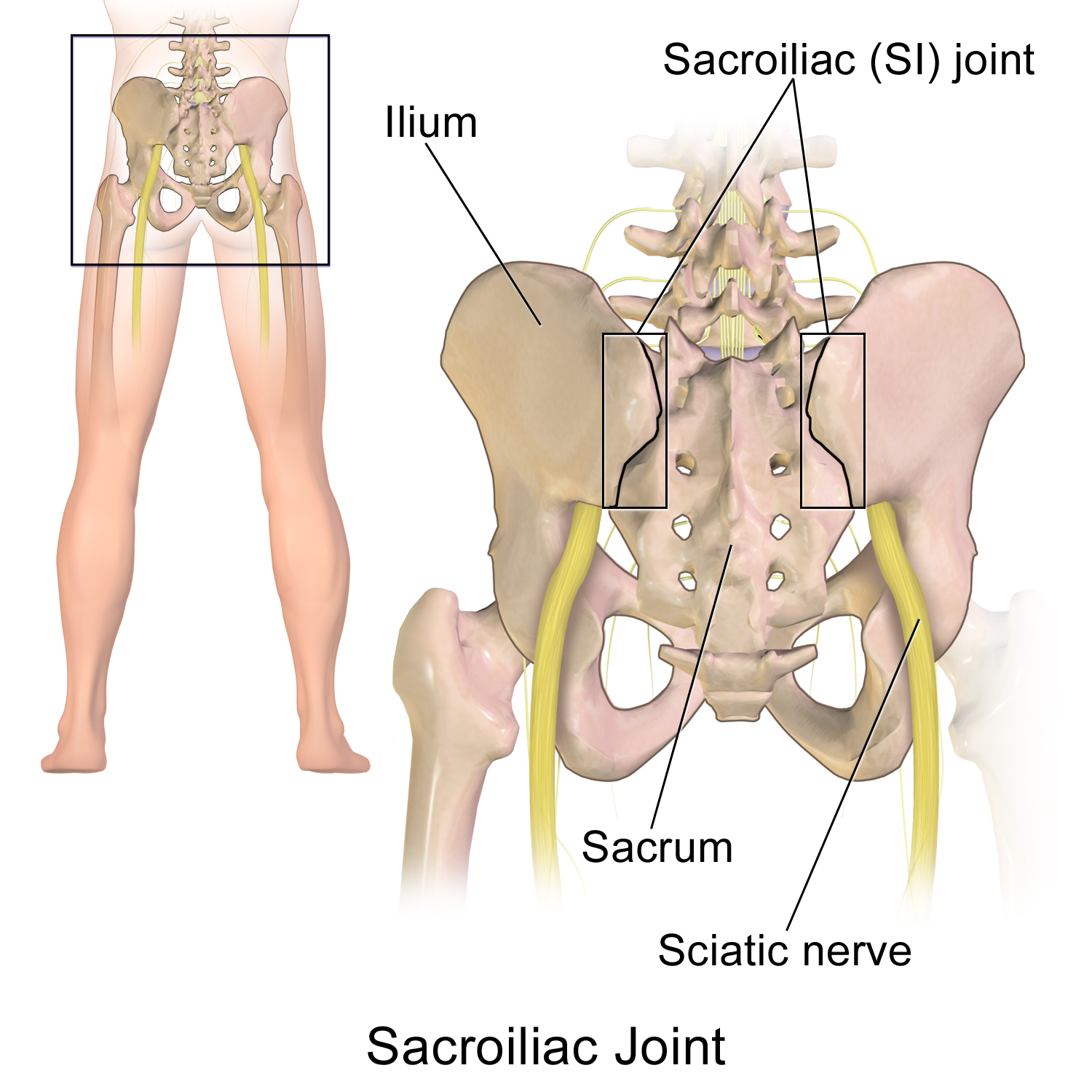
As you can see in the diagram, the SI joints act as vital shock absorbers between your upper body and your legs. Notice how closely the sciatic nerve runs next to the joint. When the SI joint becomes misaligned or inflamed, it can easily irritate this nerve, causing pain that radiates down into your buttocks and thighs.
Why Does Pregnancy and Delivery Cause SI Dysfunction?
During pregnancy, your body releases a hormone called relaxin. Its job is exactly what it sounds like: it softens and relaxes the ligaments in your pelvis so the birth canal can expand to deliver your baby.
While relaxin is a biological miracle for childbirth, it creates a temporary side effect: pelvic instability.
The Lingering Effect: Relaxin doesn't instantly vanish the moment your baby is born. It can linger in your system for several months (and even longer if you are breastfeeding), leaving your pelvic ligaments loose and vulnerable.
The Structural Shift: The mechanics of labor, prolonged pushing, or even carrying a heavy baby on one hip can push an already unstable pelvis out of its optimal alignment.
The Muscle Guarding: When the ligaments are too loose to hold the bones in place, your lower back and glute muscles go into overdrive, tightening up to "lock down" the area. This leads to that familiar, exhausting ache.
Signs You Might Have SI Joint Dysfunction
If you are experiencing any of the following symptoms while navigating postpartum life in Dublin, your SI joints likely need attention:
One-Sided Pain: A sharp or dull ache localized to one side of your lower back or upper glute.
Transition Pain: Discomfort that spikes when changing positions—like getting out of the car, stepping off a Dublin bus, standing up from a deep sofa, or rolling over in bed.
Weight-Bearing Discomfort: Pain when standing on one leg, which makes getting dressed or walking up the stairs incredibly frustrating.
Fake Sciatica: A shooting pain or ache that travels down the back of your leg, caused by the inflamed joint pressing on the nearby sciatic nerve.
Why Visit an Osteopath for Postpartum Realignment?
Many new mothers assume they just have to "wait it out" or take pain medication. However, leaving a misaligned pelvis to sort itself out can lead to long-term biomechanical issues, impacting your knees, hips, and upper back over time.
Osteopathy offers a safe, non-invasive, and holistic pathway back to comfortable movement. Here is how an osteopathic treatment supports your postpartum healing:
1. Gentle, Whole-Body Realignment
Osteopaths do not just look at the painful spot. We evaluate how your feet, knees, pelvis, and spine are interacting. Using gentle, targeted techniques—such as muscle energy techniques and soft tissue release—we help guide the SI joints back into their natural alignment without forceful adjustments.
2. Relieving Muscle Guarding
By addressing the hyper-toned (overly tight) muscles surrounding the pelvis, osteopathy breaks the pain-spasm cycle. Relaxing these muscles reduces the mechanical stress on the inflamed SI joint, providing immediate relief.
3. Restoring Fluid Mobility
Pregnancy changes your center of gravity. Osteopathic treatment helps your body adapt back to its pre-pregnancy state, improving the circulation of blood and lymphatic fluid around the pelvis, which speeds up tissue healing.
4. Practical Posture Care for Dublin Mums
A crucial part of osteopathic care is education. We provide you with tailored advice on how to lift your baby, position yourself comfortably while nursing, and safely rebuild your deep core stability without straining your healing pelvis.
A Note to New Mothers
Your body spent nine months changing to grow a baby, and the birth process itself is a major physical event. You deserve the time and care to help your body knit back together properly. Pain is your body's way of asking for support—not a tax you have to pay for becoming a mother.
If you are struggling with lower back or pelvic pain, let us help you regain your structural balance so you can focus on enjoying your new chapter.
Ready to feel balanced again? Contact Dublin City Osteopath today to book your postpartum assessment and realignment session.