
For the tech professionals and office workers navigating the busy streets of Dublin 2, long hours at a desk have become the norm. But while you’re optimizing your workflow and crushing deadlines, your body might be paying a hidden price.
Neck stiffness, recurring lower back pain, and "tech neck" aren't just minor inconveniences you should push through. They are structural issues that directly impact your overall health, sleep quality, and daily performance.
The structural impact of 'Tech Neck'. Source: Primal Pictures
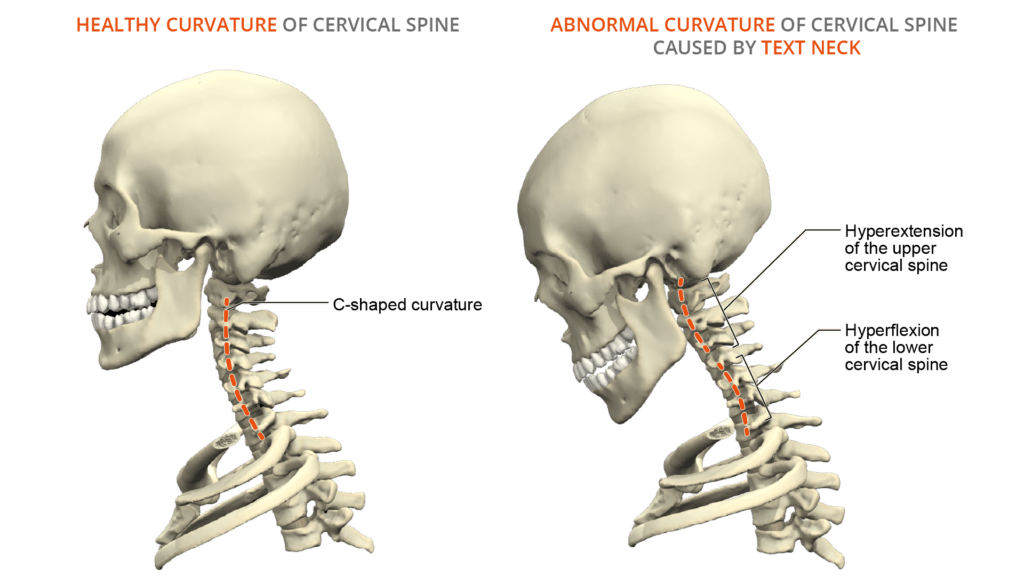
The Anatomy of "Tech Neck"
When you lean forward to look at a laptop screen or hunch over your phone, the weight of your head effectively doubles or even triples. This places an enormous, sustained strain on your cervical spine and the supporting muscles in your neck and shoulders.
Over time, this forward-head posture forces your body to build compensatory muscle patterns. The muscles in your chest become tight and shortened, while the muscles in your upper back become overstretched and weak. This imbalance is the root cause of the burning pain between your shoulder blades and the tension headaches that often hit by 3:00 PM.
Beyond the Ache: How Posture Impacts Your HRV
Many professionals today rely on wearable fitness technology to track their Heart Rate Variability (HRV) and resting heart rate to gauge their recovery. What most don't realize is that chronic postural strain can actively tank those metrics.
When your thoracic spine (upper back) is locked up and your shoulders are rounded, your diaphragm cannot fully expand. This leads to shallow, upper-chest breathing, which subtly signals your body to remain in a state of low-grade stress (activating the sympathetic nervous system). By correcting your posture and freeing up your ribcage, you improve your breathing mechanics—which can directly improve your HRV and help you get more restorative sleep.
3 Quick Desk Hacks for Immediate Relief
Before relying on painkillers, try implementing these basic ergonomic shifts at your workstation today:
The 20-8-2 Rule: Sitting perfectly still for eight hours is hard on your body, even with a great chair. For every 30 minutes, aim to sit for 20 minutes, stand for 8 minutes, and walk or move for 2 minutes.
APICO PAIN MANAGEMENT
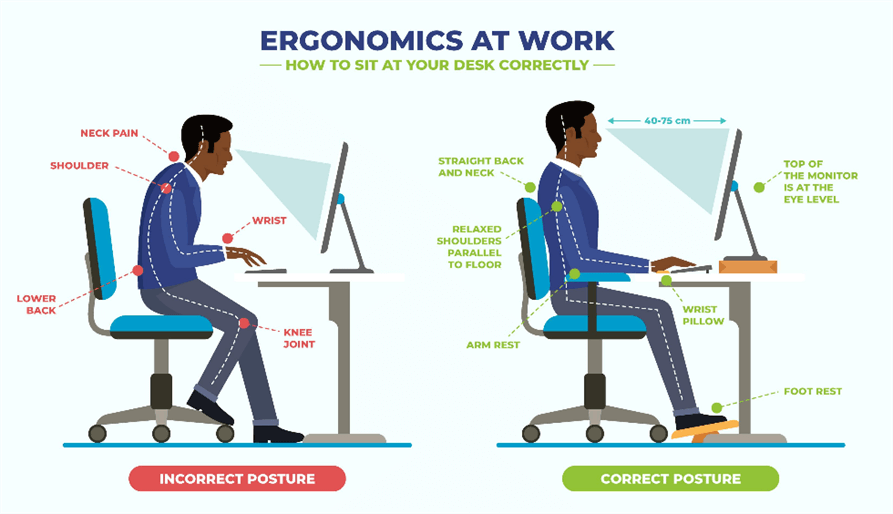
Elevate Your Monitor: Your eyes should naturally fall on the top third of your screen without having to tilt your head down. If you work primarily on a laptop, a stand and a separate wireless keyboard are non-negotiable for spinal health.
Nuffield Clinic
Check Your Angles: Keep your feet flat on the floor, your knees at a 90-degree angle, and your elbows resting comfortably to support the weight of your arms.
Correct vs. Incorrect Desk Ergonomics. Source: LoctekMotion
The Complete Recovery Pathway
While ergonomic adjustments are crucial for prevention, they often aren't enough to reverse years of accumulated structural strain. Once compensatory muscle patterns are locked in, manual osteopathic intervention is often required to break the cycle of pain.
For corporate workers dealing with chronic desk strain, we recommend our Complete Recovery Pathway. This targeted 4-session package (€275) is specifically designed to reset the physical load of daily corporate life:
Session 1: A comprehensive biomechanical audit to diagnose structural imbalances, followed by immediate osteopathic intervention for acute relief.
Sessions 2 & 3: A combined approach utilizing targeted adjustments and intensive soft tissue release to break down stubborn compensatory muscle patterns.
Session 4: Final structural stabilization and the development of a customized preventative protocol to keep you performing at your best.
(Prefer to start with a single visit? Initial consultations are €80, with follow-up treatments at €75).
Step Away from the Desk and Start Healing
You don't have to accept back and neck pain as just another part of the job. Located conveniently at Clifton House on Fitzwilliam Street Lower, Dublin City Osteopath is perfectly positioned for you to step away from your desk and get expert relief right on your lunch break.
Don't delay your recovery—get an accurate diagnosis today and start your journey back to pain-free movement.